
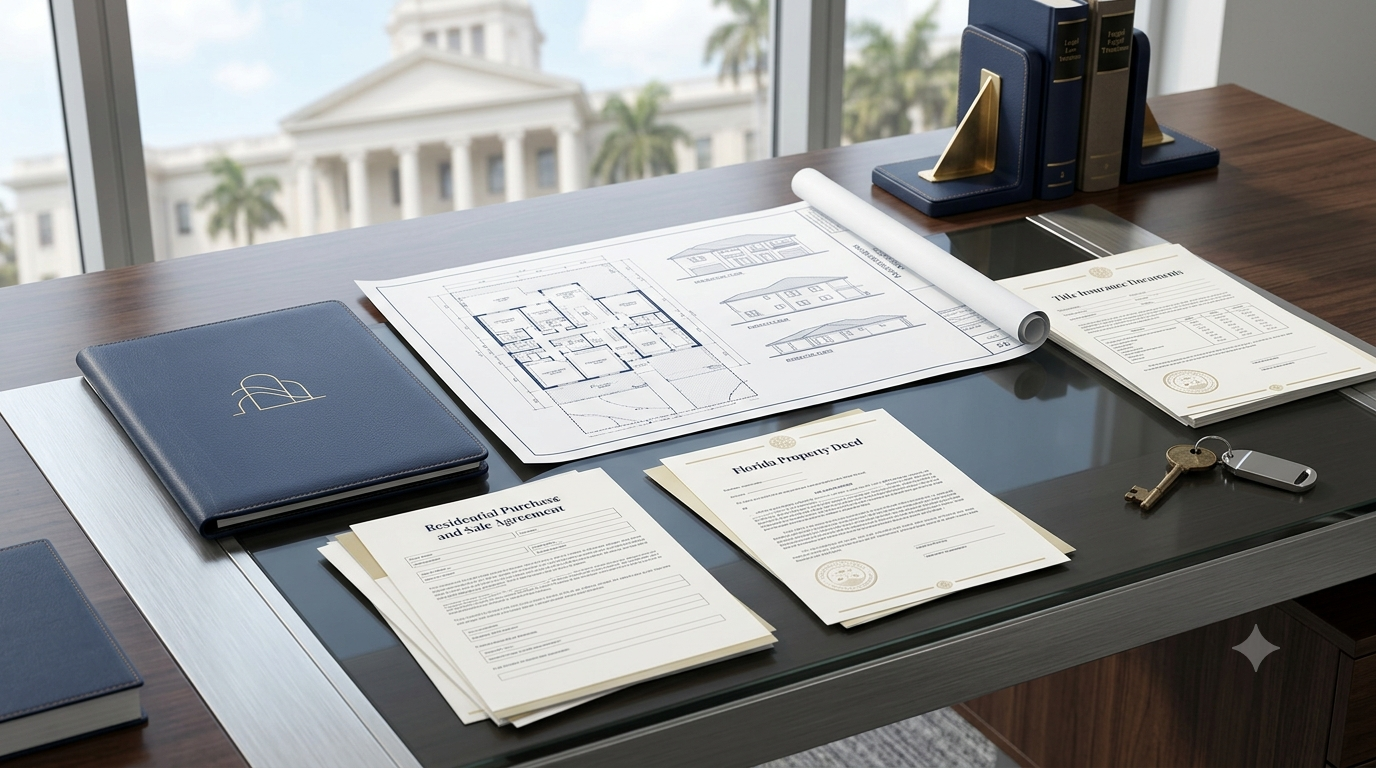
Buying, selling, leasing, or investing in Florida real estate can involve far more than agreeing on a price and choosing a closing date. A purchase agreement may create binding obligations, title records may reveal liens or ownership problems, and condominium or commercial property documents may contain restrictions that affect how the property can be used.
A Real Estate Attorney Florida buyers, sellers, investors, and property owners consult can review these legal issues before they become expensive disputes. Legal guidance is particularly valuable before signing a contract, when a title problem appears, when a transaction involves unusual terms, or when the parties disagree about their obligations.
At Law Offices of Lance Denha, PA, we assist clients with Florida real estate transactions, property disputes, contracts, title concerns, and related legal matters. This guide explains when involving a real estate attorney may be appropriate and why timing can make a meaningful difference.
Quick Answer
A Florida real estate attorney may be needed when a transaction involves a complicated contract, title defect, lien, condominium issue, commercial property, ownership dispute, failed closing, seller disclosure concern, foreclosure, or breach of agreement. Consulting an attorney before signing legally binding documents can provide more opportunities to clarify obligations, negotiate protective terms, and identify risks.
Key Takeaways
- A standard real estate form is still a legally significant contract.
- The best time to obtain legal review is generally before signing.
- A closing agent does not necessarily represent your individual interests.
- Title defects, liens, deed errors, and ownership disputes can delay or prevent a closing.
- Condominium purchases require careful review of association documents, budgets, assessments, inspection information, and use restrictions.
- Commercial transactions often involve additional concerns involving leases, zoning, environmental issues, financing, and business ownership.
- A real estate attorney can provide legal advice; a real estate agent cannot replace independent legal counsel.
- Waiting until a dispute develops may limit the practical solutions available.
Table of Contents
- What Does a Florida Real Estate Attorney Do?
- Do You Need an Attorney for Every Florida Property Transaction?
- When Should You Hire a Real Estate Attorney in Florida?
- How an Attorney Reviews a Real Estate Contract
- Real Estate Attorney Versus Real Estate Agent
- Common Florida Real Estate Problems
- Risks of Waiting Until After Signing
- Questions to Ask a Real Estate Attorney
- Frequently Asked Questions
- Why Choose Law Offices of Lance Denha, PA
- Conclusion
What Does a Real Estate Attorney Florida Clients Hire Actually Do?
A Real Estate Attorney Florida property owners retain provides legal guidance regarding property transactions, contracts, ownership rights, title concerns, disputes, and related financial obligations.
The attorney’s role depends on the matter. In a purchase or sale, the work may focus on reviewing and negotiating the contract. In a dispute, the attorney may evaluate the parties’ rights, communications, payment records, title documents, and possible remedies.
A Florida real estate attorney may assist with:
- Purchase and sale agreements
- Contract amendments and addenda
- Title searches and title defects
- Liens, judgments, and competing ownership claims
- Deeds and ownership transfers
- Residential and commercial closings
- Condominium and homeowners’ association matters
- Boundary, access, and easement disputes
- Seller disclosure concerns
- Earnest-money and escrow disputes
- Commercial leases
- Investment-property transactions
- Breach of contract claims
- Foreclosure-related property matters
- Business entities purchasing or holding real estate
The attorney does not simply explain documents. Legal counsel can identify how individual contract clauses may affect your deposit, financing, inspection rights, closing obligations, remedies, and ability to terminate the transaction.
Do You Need an Attorney for Every Florida Real Estate Transaction?
Not every routine property transaction develops into a legal dispute. However, the better question is often not whether an attorney is mandatory. It is whether the financial and legal risks justify obtaining independent advice.
A real estate closing may involve agents, brokers, lenders, inspectors, appraisers, title professionals, and a closing agent. Each professional has a different role. The person coordinating the closing may not be acting as your personal attorney or protecting only your interests.
The Florida Bar specifically warns consumers that a closing agent may be a lawyer without necessarily representing the buyer’s personal interests. It also recommends retaining a lawyer before signing a purchase contract because protecting the buyer at the contract stage is usually easier than attempting to change the agreement later.
Independent legal guidance becomes especially important when:
- The contract contains unfamiliar or customized terms.
- A significant amount of money is at risk.
- The transaction involves an LLC, trust, estate, or corporation.
- The property has title or lien concerns.
- The buyer is purchasing without an agent.
- The parties are already disagreeing.
- The transaction involves commercial or investment property.
- A deadline is approaching.
- One party may be unable or unwilling to close.
An attorney’s involvement does not need to make the transaction adversarial. Early review can help clarify expectations and reduce the risk of conflict.
Real Estate Attorney Florida: When Is Legal Help Most Valuable?
Before You Sign a Purchase or Sale Agreement
The most valuable time to contact an attorney is often before signing the contract.
A purchase agreement determines much more than the price. It may establish:
- The deposit amount
- The inspection period
- Financing requirements
- Appraisal conditions
- Title obligations
- Repair responsibilities
- Closing costs
- Risk of loss
- Default provisions
- Available remedies
- The closing deadline
- Whether contractual deadlines may be extended
Florida law generally requires contracts for the sale of land, or a sufficient written memorandum of the agreement, to be in writing and signed by the party against whom enforcement is sought. This makes the language in the signed agreement particularly important.
A buyer or seller should not assume that a form contract automatically protects both sides equally. Form agreements contain negotiable provisions, and special circumstances may require additional language.
For example, a buyer may need protection if the purchase depends on selling another property. A seller may need specific requirements regarding proof of funds or financing approval. An investor may require assignment rights, access for inspections, or an extended due-diligence period.
These matters are generally easier to address before the contract becomes binding.
When Buying or Selling Without a Real Estate Agent
A for-sale-by-owner transaction may save a commission, but it also removes a professional who would ordinarily help coordinate offers, inspections, disclosures, and closing logistics.
An attorney can help draft or review the agreement, explain the required documents, identify deadlines, and coordinate legal aspects of the transaction.
Legal review is especially important when one party prepared the contract or downloaded a form without knowing whether it fits the transaction.
When the Property Has a Title Problem
A title search examines the public record for interests or claims that may affect ownership. Problems can arise from:
- Unreleased mortgages
- Recorded judgments
- Tax liens
- Contractor or association liens
- Errors in prior deeds
- Probate issues
- Divorce-related ownership claims
- Forged or improperly executed documents
- Unknown heirs
- Boundary discrepancies
- Easements or restrictions
- Conflicting legal descriptions
Florida’s recording law gives legal significance to recording conveyances, transfers, mortgages, and certain leases in the appropriate public records. A failure to record an interest can affect its enforceability against creditors or later purchasers without notice.
A title company may identify a defect, but resolving the legal issue may require an attorney. The solution could involve obtaining a corrective deed, satisfying a lien, locating an interested party, addressing probate, or pursuing court relief.
When Ownership Is Being Transferred
Property owners sometimes transfer real estate between spouses, family members, trusts, estates, or business entities.
A deed obtained online may not address the full legal effect of the transfer. Changing ownership can affect:
- Homestead rights
- Creditor exposure
- Estate planning
- Existing mortgages
- Property taxes
- Association requirements
- Future sale rights
- Responsibility for the property
A Real Estate Attorney Florida owners consult can explain the proposed ownership structure and prepare documents suited to the intended transfer.
When a transaction also involves an LLC, partnership, corporation, or business asset, review may require both real estate and business-law considerations. Learn more about the firm’s Business Law services.
When Purchasing a Florida Condominium
A condominium purchase is not limited to the interior of the unit. The buyer also becomes subject to the declaration, bylaws, rules, budgets, assessments, maintenance obligations, and governance structure of the condominium association.
Important issues may include:
- Rental restrictions
- Pet restrictions
- Parking and storage rights
- Pending or anticipated assessments
- Association reserves
- Litigation involving the association
- Building inspections
- Structural integrity reserve studies
- Maintenance responsibilities
- Insurance obligations
- Approval requirements
- Restrictions on alterations
Florida condominium law includes detailed disclosure requirements. Depending on whether the seller is a developer or a nondeveloper unit owner, the buyer may have rights involving delivery of condominium documents and a limited period to cancel under qualifying circumstances. Current law also addresses disclosure of milestone inspections, turnover inspection reports, and structural integrity reserve studies where applicable.
Because statutory rights and contractual deadlines may be short, condominium documents should be reviewed promptly.
During a Commercial Real Estate Transaction
Commercial property transactions usually involve greater customization than residential sales.
Legal issues may include:
- Zoning and permitted use
- Environmental conditions
- Existing tenants
- Lease assignments
- Personal guarantees
- Financing contingencies
- Property condition
- Access rights
- Signage restrictions
- Common-area expenses
- Build-out obligations
- Tax allocation
- Insurance requirements
- Entity authority
- Due-diligence deadlines
An attorney may review the purchase agreement, lease, title commitment, survey, loan documents, tenant records, and organizational documents.
Commercial buyers should also verify that the property can legally and practically support the intended business. Owning a property does not necessarily mean every proposed use is permitted.
When an LLC, Trust, Estate, or Business Is Involved
The named buyer or seller must have authority to complete the transaction.
When property is held by an entity, trust, or estate, questions may arise about:
- Who has authority to sign
- Whether corporate approval is required
- Whether probate proceedings are necessary
- How title should be vested
- Whether personal guarantees are involved
- How ownership percentages are documented
- What happens if business partners disagree
These transactions can combine real estate, business, probate, and contractual issues. Reviewing the structure before closing can help prevent later disputes about ownership or authority.
When a Buyer or Seller Breaches the Contract
A transaction may break down when one party:
- Refuses to close
- Misses a deadline
- Cannot obtain financing
- Fails to make the required deposit
- Conceals a material issue
- Disputes inspection results
- Cannot provide marketable title
- Demands terms not included in the agreement
- Improperly attempts to cancel
The contract typically determines what constitutes default and what remedies may be pursued. The available response depends on the language of the agreement, the conduct of the parties, and applicable law.
A real estate attorney can review the contract, communications, notices, and timeline to determine what options may be available. Acting without understanding the default provisions can make the dispute more difficult.
When There Is an Escrow Deposit Dispute
Earnest-money deposits frequently become disputed when a transaction fails to close.
The buyer may believe a financing, inspection, appraisal, or title contingency allows cancellation. The seller may argue that the buyer missed a deadline or terminated without contractual authority.
The escrow holder generally cannot simply decide which party deserves the money when conflicting demands exist. The contract and applicable procedure determine how the dispute may proceed.
An attorney can evaluate whether the cancellation complied with the agreement and help present the client’s position.
When a Seller May Have Failed to Disclose a Problem
Disputes may arise when a buyer discovers a serious condition after closing and believes the seller knew about it.
Examples include:
- Water intrusion
- Roof damage
- Unpermitted additions
- Mold
- Plumbing or electrical defects
- Boundary conflicts
- Association violations
- Prior insurance claims
- Repeated flooding
- Structural concerns
Not every post-closing defect creates a legal claim. The attorney must consider what the seller knew, what was disclosed, what inspections revealed, what the contract says, and whether the issue was readily observable.
Preserving the inspection report, photographs, repair estimates, seller disclosures, messages, and other evidence can be important.
During a Boundary, Easement, or Access Dispute
Property disputes often begin when an owner installs a fence, blocks a driveway, challenges a survey, removes landscaping, or disputes access.
A recorded survey or deed may not tell the entire story. The matter may involve easements, historical use, legal descriptions, encroachments, association restrictions, or claims concerning possession.
Before removing a structure or interfering with another party’s access, an owner should understand the legal rights involved. Self-help actions can intensify the conflict.
When Foreclosure or a Distressed Sale Is Involved
A short sale, foreclosure-related sale, or purchase of distressed property can involve additional risks.
A homeowner facing mortgage litigation may need advice about the foreclosure case, sale proceeds, liens, deadlines, and communications with the lender. Buyers of distressed properties should understand that a low price does not eliminate title or possession concerns.
Law Offices of Lance Denha, PA assists homeowners with Foreclosure Defense in addition to broader property matters.
How a Florida Real Estate Attorney Reviews a Contract
Contract review is not limited to checking names and spelling.
An attorney may analyze:
- The parties: Are the correct individuals or entities named, and do they have authority to sign?
- The property: Is the address and legal description accurate?
- The price and deposit: When must funds be delivered, and who holds them?
- Financing: Is the obligation contingent on financing, and what must the buyer do to preserve that protection?
- Inspection rights: What may be inspected, and when can the buyer cancel or request repairs?
- Title: What title must the seller provide, and how are defects handled?
- Association documents: What disclosures and approvals are required?
- Closing costs: Which party pays each expense?
- Deadlines: Are they realistic, and what happens if one is missed?
- Default: What remedies are available if the other party does not perform?
- Special circumstances: Does the transaction require additional terms involving tenants, repairs, furniture, assignments, leases, or business assets?
The attorney may recommend revisions, an addendum, additional due diligence, or clarification before the client signs.
Real Estate Attorney Versus Real Estate Agent
Real estate attorneys and real estate agents serve different purposes.
| Real Estate Agent | Real Estate Attorney |
|---|---|
| Helps market or locate property | Provides legal advice |
| Coordinates showings and offers | Interprets contract language |
| Assists with negotiations | Drafts customized legal provisions |
| Helps manage transaction logistics | Evaluates legal rights and risks |
| Provides market-related guidance | Handles title and ownership issues |
| Cannot replace independent legal counsel | May represent a client in a legal dispute |
A capable agent can provide substantial practical assistance, but an agent is not a substitute for an attorney when the client needs legal interpretation, customized drafting, or representation in a dispute.
The same distinction applies to a closing agent. A closing agent may coordinate documents and funds without serving as the personal attorney for either party.
Risks of Waiting Until After Signing
People often seek legal advice only after a transaction begins to fail.
By that point:
- The inspection period may have expired.
- The financing deadline may have passed.
- The deposit may be at risk.
- The buyer may be unable to cancel freely.
- The seller may have accepted another obligation.
- A title objection deadline may have been missed.
- The parties may already be accusing each other of default.
An attorney may still be able to provide valuable guidance, but prevention is usually more efficient than dispute resolution.
Before signing, contract terms can be negotiated. After signing, the analysis often focuses on what the existing agreement permits or requires.
Questions to Ask a Real Estate Attorney
Before retaining legal counsel, consider asking:
- Do you regularly handle Florida real estate matters?
- Will you represent my interests or act only as the closing agent?
- What documents should I provide?
- What legal risks do you see in the proposed transaction?
- Which deadlines require immediate attention?
- Will you review the title commitment and survey?
- Can you draft or negotiate contract changes?
- What are the likely legal fees and costs?
- Who will communicate with the broker, lender, title company, or opposing party?
- What should I avoid doing while the matter is under review?
A productive consultation usually begins with the contract, addenda, title documents, inspection reports, correspondence, and a clear timeline of events.
Frequently Asked Questions
When should I contact a real estate attorney in Florida?
Contacting an attorney before signing a purchase agreement is often the safest approach. You should also consider legal review when a transaction involves title problems, customized terms, commercial property, a condominium, an ownership dispute, a failed closing, or significant financial exposure.
Can a real estate attorney review a contract prepared by an agent?
Yes. A Florida real estate attorney can review a form contract, explain its legal effect, identify risks, and recommend changes or addenda suited to the client’s circumstances.
Is the closing attorney automatically my attorney?
Not necessarily. A lawyer serving as the closing agent may not be representing your personal interests. Confirm the attorney’s role and whether a separate attorney-client relationship exists. The Florida Bar specifically advises consumers to understand the closing agent’s role.
What is a title defect?
A title defect is a problem affecting ownership or the ability to transfer clear title. Examples include unreleased mortgages, recorded liens, deed errors, claims by heirs, conflicting ownership interests, and incorrect legal descriptions.
Do I need an attorney for a Florida condominium purchase?
Independent legal review can be especially helpful because condominium purchases involve association rules, financial records, assessments, inspection information, reserve studies, insurance concerns, and statutory disclosure requirements in addition to the unit itself.
Can a real estate attorney help after a contract is signed?
Yes. An attorney may interpret the agreement, identify upcoming deadlines, advise on performance, negotiate amendments, address title concerns, or assist if a dispute develops. However, the options may be narrower after the contract becomes binding.
Can a real estate lawyer help with a property dispute?
Yes. Depending on the facts, legal counsel may assist with contract disputes, ownership claims, boundaries, easements, title defects, escrow deposits, seller disclosures, liens, association matters, or failed transactions.
What documents should I bring to a consultation?
Bring the signed or proposed contract, addenda, disclosures, title commitment, survey, inspection reports, association documents, deeds, notices, emails, text messages, payment records, and a timeline of important events.
Why Choose Law Offices of Lance Denha, PA?
Real estate matters can affect ownership rights, business plans, investments, and long-term financial security. Clients need more than a general explanation of Florida property law. They need guidance based on the specific contract, property, parties, and circumstances involved.
Law Offices of Lance Denha, PA assists Florida clients with matters involving:
- Real estate contracts
- Residential and commercial property
- Title and ownership concerns
- Property disputes
- Business-related real estate transactions
- Foreclosure defense
- Related litigation and negotiations
The firm focuses on clear communication and practical legal analysis without promising a particular result. Learn more about the firm’s Real Estate Law services.
Conclusion
A real estate transaction can appear routine until a contract deadline is missed, a lien appears, an association assessment is disclosed, or one party refuses to close. At that point, the language of the documents and the actions already taken can significantly affect the available options.
Consulting a Real Estate Attorney Florida buyers, sellers, investors, and property owners trust is especially important before signing a contract, purchasing a condominium or commercial property, transferring ownership, resolving a title problem, or responding to a property dispute.
Early legal review can help clarify obligations, identify avoidable risks, and ensure that major decisions are based on more than assumptions or standard forms.
To discuss a Florida real estate matter with Law Offices of Lance Denha, PA, call 844-410-4415. The firm can review the circumstances and explain the legal options that may be available.
This article provides general legal information and is not a substitute for advice regarding a specific transaction or dispute. Reading this article does not create an attorney-client relationship.
If you are looking for –
Real Estate Attorney Florida
Florida Real Estate Lawyer
Real Estate Contracts
Property Disputes
Title Issues
Real Estate Closings
Commercial Real Estate
Florida Property Law
