
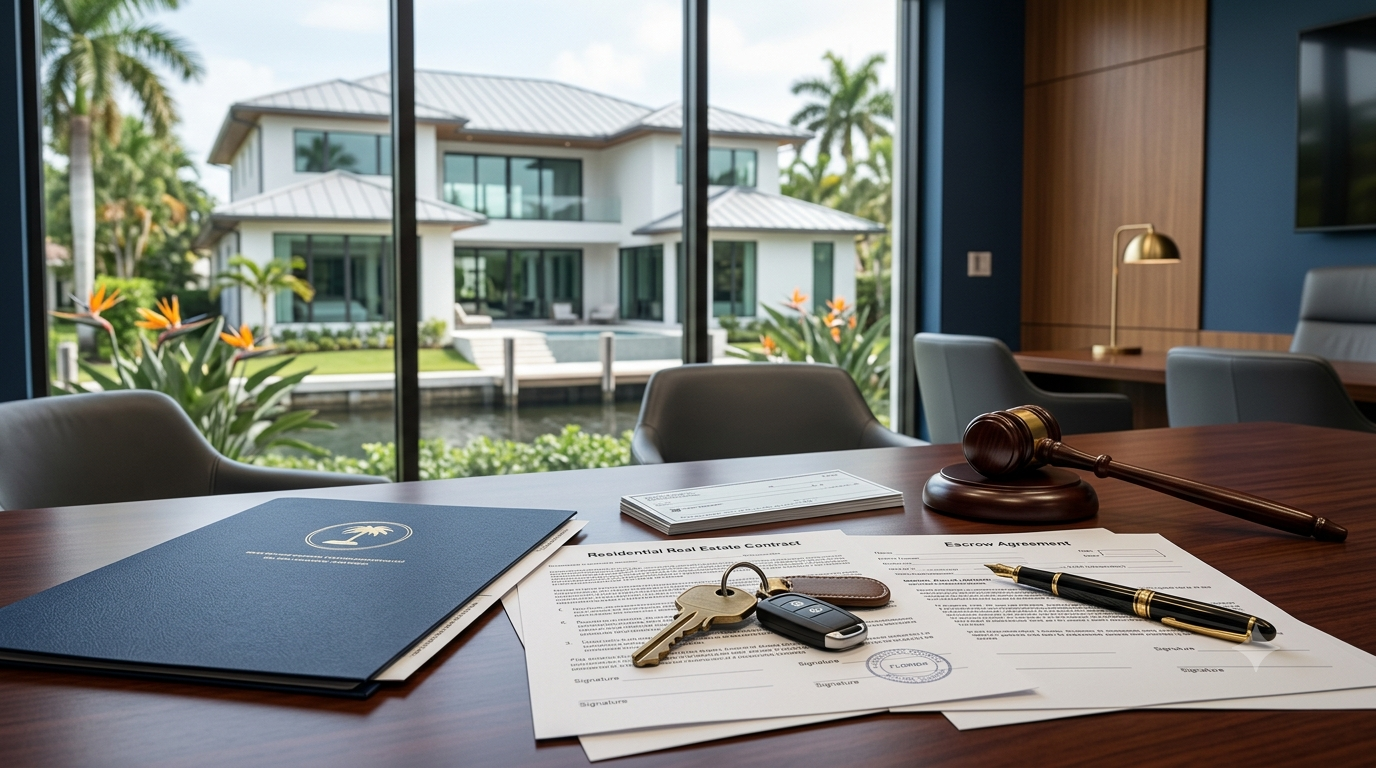
Escrow Deposit Dispute in Florida: 7 Critical Legal Options for Buyers and Sellers
Escrow deposit dispute in Florida? When a real estate transaction falls apart and both the buyer and seller demand the earnest-money deposit, what began as a property deal can quickly become a legal dispute involving thousands—or substantially more—of dollars.
The escrow holder generally cannot simply decide who deserves the money whenever both parties make conflicting claims. The purchase agreement, cancellation rights, financing provisions, inspection deadlines, title issues, default provisions, and conduct of both parties may determine who is legally entitled to the deposit.
If your Florida real estate transaction has failed and your escrow money is now disputed, acting before signing a release or making admissions can be important.
What Matters Most in an Escrow Dispute
- Who cancelled the transaction—and why?
- Was the cancellation permitted under the contract?
- Were contractual deadlines followed?
- Did the buyer satisfy financing or inspection requirements?
- Did the seller fulfill title and closing obligations?
- What does the contract say happens to the deposit after default?
What Is an Escrow Deposit Dispute in Florida?
An escrow deposit dispute in Florida typically arises when money deposited toward a real estate transaction remains in escrow after the deal fails and two or more parties claim entitlement to the funds.
The deposit may also be described as an earnest-money deposit, good-faith deposit, initial deposit, additional deposit, or escrow deposit.
Its purpose is normally defined by the purchase agreement.
The Buyer May Claim
The buyer validly terminated under an inspection, financing, title, or other contractual contingency and is entitled to return of the deposit.
The Seller May Claim
The buyer defaulted after contractual cancellation rights expired and the seller is entitled to retain the deposit under the agreement.
Neither position should automatically be accepted without reviewing the actual contract and transaction history.
Review the Contract Before Demanding the Escrow Deposit
The purchase agreement is the starting point in virtually every escrow deposit dispute in Florida.
Locate the fully executed agreement and every amendment, addendum, extension, counteroffer, and cancellation notice.
- Deposit amount
- Deposit deadline
- Inspection period
- Financing contingency
- Appraisal provisions
- Title requirements
- Closing deadline
- Default remedies
The contract may expressly state what happens to the deposit when either the buyer or seller defaults.
It may also require notice before a party can terminate.
Determine Why the Real Estate Transaction Failed
The reason the transaction failed may determine who has the stronger claim to the escrow funds.
Common disputes involve:
- Buyer failed to obtain financing
- Buyer cancelled after inspection
- Property did not appraise
- Seller refused to close
- Seller could not deliver required title
- Buyer missed a contractual deadline
- Seller accepted or attempted to pursue another offer
- Closing date passed without completion
An escrow deposit dispute in Florida may therefore be part of a much larger breach-of-contract dispute.
A buyer cannot necessarily recover a deposit merely because the transaction did not close. Likewise, a seller cannot automatically keep the deposit simply because closing failed. The contractual reason for failure matters.
Check Whether the Buyer Had a Valid Cancellation Right
Florida real estate contracts commonly contain contingencies that may allow a buyer to cancel within specified conditions or deadlines.
Examples can involve:
- Inspection rights
- Financing approval
- Appraisal
- Title objections
- Association review
- Sale of another property
The exact contract controls.
If the buyer properly exercised a valid contractual cancellation right, the buyer may have a strong argument for return of the deposit.
But if the buyer attempted to cancel after the applicable deadline or failed to provide required notice, the analysis may change substantially.
Determine Whether the Seller Failed to Perform
A seller can also cause a transaction to fail.
Potential seller issues can include:
- Refusing to execute closing documents
- Attempting to cancel without contractual grounds
- Failing to resolve a title problem
- Failing to satisfy contractual obligations
- Refusing to convey the agreed property
- Attempting to sell to another buyer
If an escrow deposit dispute in Florida follows an alleged seller breach, the deposit may not be the buyer's only concern.
Depending on the contract and circumstances, the buyer may also need to evaluate potential breach-of-contract remedies or specific performance.
Understand What Happens When Both Parties Demand the Money
This is where many buyers and sellers become frustrated.
The escrow agent may receive:
Buyer: “Return my deposit.”
Seller: “Do not release it. The buyer defaulted.”
The escrow holder generally should not simply choose a winner without authority.
For Florida licensed real estate brokers holding escrow, state law addresses conflicting demands and good-faith uncertainty over entitlement to the funds.
Potential procedures can include:
Escrow Disbursement Order
A qualifying broker may request that the Florida Real Estate Commission determine entitlement to escrowed property through the statutory process.
Arbitration
With consent of all parties, the dispute may potentially be submitted to arbitration.
Court / Interpleader
The escrow holder may seek a court determination concerning entitlement to the disputed deposit.
Mediation
With written consent, mediation may potentially be used to attempt resolution.
The procedure applicable to a particular escrow deposit dispute in Florida depends on who holds the money and the circumstances.
Evaluate Whether Settlement Makes More Sense Than Litigation
Escrow disputes can sometimes be resolved before formal litigation.
For example, suppose $25,000 is being held in escrow.
The buyer claims a financing contingency permitted cancellation.
The seller argues that the cancellation deadline already expired.
Both parties face legal expense and uncertainty.
A negotiated resolution may sometimes involve:
- Full return to one party
- Division of the deposit
- Settlement of broader transaction claims
- Mutual releases
- Payment of specific transaction expenses
Settlement should be evaluated against the value of the dispute and the strength of each party's contractual position.
Sometimes it is not. A seller may claim additional damages. A buyer may still seek the property. Resolve the full dispute—not merely the location of the escrow funds.
Speak With a Florida Real Estate Attorney Before Giving Up Your Claim
A lawyer reviewing an escrow deposit dispute in Florida may examine:
- Purchase agreement
- Escrow provisions
- Financing documents
- Inspection notices
- Cancellation notices
- Title commitment
- Closing records
- Emails and messages
The attorney can then evaluate:
- Whether the buyer properly cancelled
- Whether the seller breached
- Whether a deposit forfeiture provision applies
- Whether another contractual remedy exists
- Whether negotiation is practical
- Whether litigation or interpleader may be necessary
Early review can be particularly useful before either party signs a broad release or takes a position that may affect other claims.
Can the Seller Automatically Keep the Earnest Money?
No universal rule says a seller automatically keeps a deposit whenever a Florida real estate transaction fails.
The result depends on the contract and why the deal ended.
The seller may have a claim when the buyer defaults after cancellation rights have expired and the agreement provides a deposit remedy.
But the analysis changes if the buyer properly terminated under a contractual contingency or the seller caused the failure to close.
Can the Buyer Automatically Get the Escrow Deposit Back?
Likewise, putting money into escrow does not mean the buyer automatically receives it back whenever the transaction does not close.
A buyer may need to establish that cancellation was permitted under the contract.
Relevant issues can include:
- Was notice timely?
- Was notice delivered correctly?
- Did a contingency actually apply?
- Had the contingency been waived?
- Was financing denied within the proper period?
- Did the buyer remain obligated to close?
An escrow deposit dispute in Florida frequently turns on details that appeared minor while the transaction was active.
What Documents Should You Preserve?
If the deposit has become disputed, preserve the complete transaction file.
Contract Documents
- Purchase agreement
- Addenda
- Extensions
- Counteroffers
- Cancellation forms
Transaction Evidence
- Deposit receipt
- Inspection reports
- Loan correspondence
- Title documents
- Closing communications
Communications
- Text messages
- Agent communications
- Escrow-agent communications
- Demand letters
Financial Records
- Wire confirmation
- Loan approval
- Appraisal
- Closing disclosure
- Transaction expenses
Common Mistakes During an Escrow Deposit Dispute in Florida
Signing a Release Too Quickly
A release may affect more than the escrow deposit. Understand the document before signing it.
Relying on the Agent's Opinion
Real estate professionals may provide valuable transaction assistance, but a legal entitlement dispute may require legal analysis.
Ignoring Contract Deadlines
A cancellation right can depend on whether required notice was sent before a specific deadline.
Making Emotional Admissions
Texts and emails sent during the dispute can later become evidence concerning why the transaction failed.
How a Florida Real Estate Attorney May Help
When thousands of dollars are sitting in escrow, the objective should be more than sending increasingly aggressive emails to the other party.
An attorney may help determine who has the stronger contractual claim and whether the dispute can be resolved before additional litigation expense is incurred.
- Review the purchase agreement and amendments
- Analyze cancellation rights and deadlines
- Evaluate buyer or seller default
- Review escrow and deposit provisions
- Prepare or respond to a demand
- Negotiate settlement
- Evaluate litigation or court adjudication where appropriate
Frequently Asked Questions About an Escrow Deposit Dispute in Florida
What happens when both buyer and seller claim the escrow deposit?
The escrow holder may be unable to release the money based solely on one party's demand. The applicable process depends on the escrow holder, contract, and circumstances.
Can a seller keep the deposit if the buyer's financing fails?
It depends on the financing provisions, deadlines, notices, and whether the buyer complied with the contract.
Can the buyer recover the deposit after inspection?
Potentially, if the contract gave the buyer a valid inspection-based termination right and it was exercised correctly and on time.
What is an escrow disbursement order?
Florida law provides a procedure through which a qualifying licensed broker holding disputed escrowed property may request a determination from the Florida Real Estate Commission concerning entitlement to the funds.
Can the dispute go to court?
Potentially. Court adjudication or an interpleader action may be used in appropriate circumstances to determine who is legally entitled to disputed escrow funds.
Should I sign the escrow release?
Understand the entire document first. If the transaction has become disputed or additional claims may exist, legal review may be appropriate before signing.
When should I contact a real estate attorney?
If the other party refuses to release the deposit, alleges that you defaulted, threatens litigation, or the escrow holder reports conflicting demands, prompt review can help clarify your position before further action is taken.
Escrow Deposit Dispute in Florida? Protect Your Position Before Signing Away Your Rights
An escrow deposit dispute in Florida can involve much more than deciding who receives a check.
The underlying dispute may involve financing, inspection rights, title defects, missed deadlines, seller default, buyer default, or a larger breach-of-contract claim.
If your Florida real estate transaction has failed and the buyer and seller are now disputing the escrow deposit, consider having the purchase agreement and transaction history reviewed before signing a release or abandoning your claim.
Law Offices of Lance Denha, PA
Florida Real Estate & Business Law
844-410-4415
