
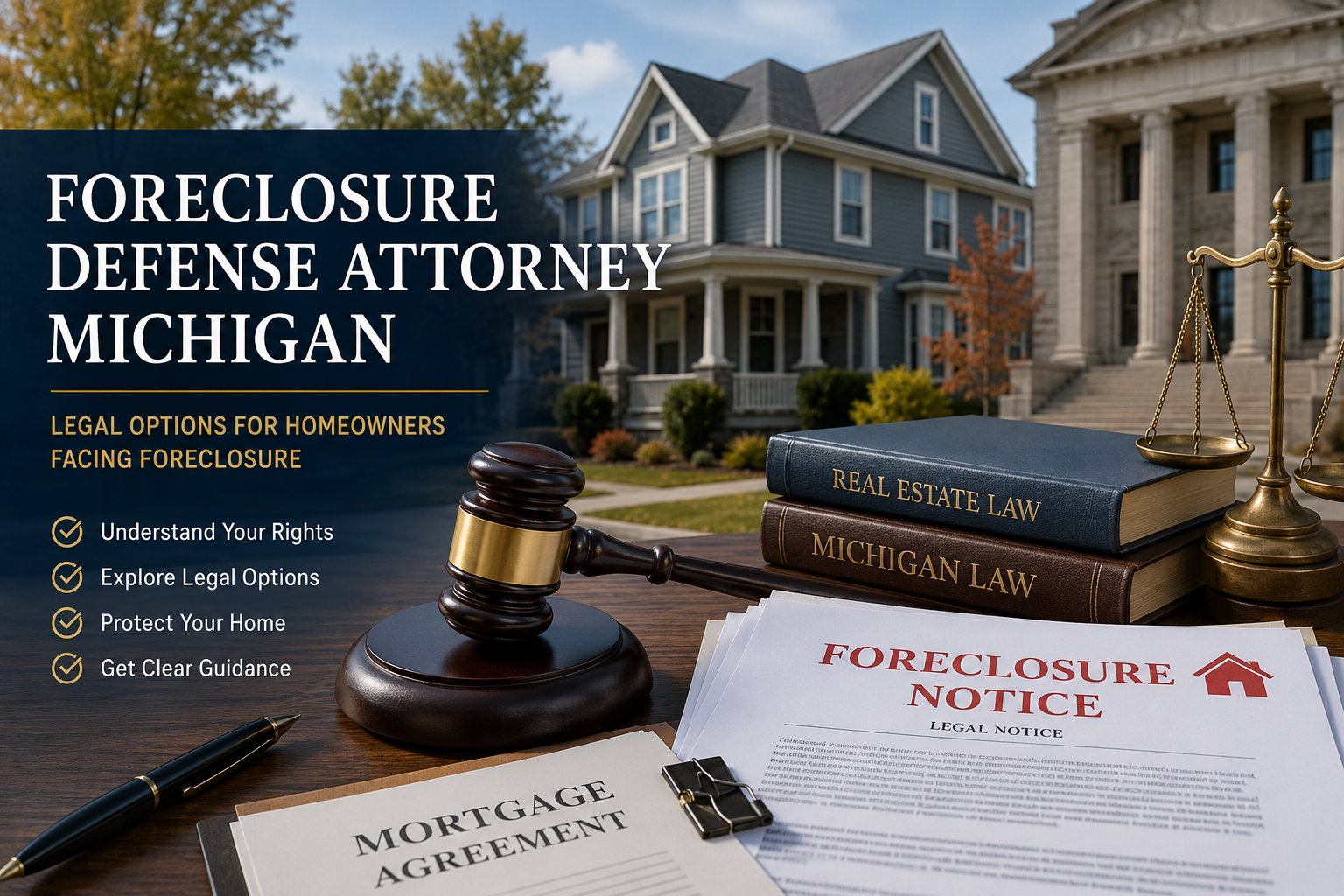
Falling behind on mortgage payments can create immediate fear and uncertainty. Many homeowners feel embarrassed, stressed, or unsure about what to do next. You may be receiving letters from your mortgage company, calls from the loan servicer, or notices about a possible sheriff sale. In that situation, speaking with a foreclosure defense attorney Michigan homeowners can turn to may help you understand your rights, deadlines, and realistic options.
Foreclosure is not just a financial problem. It is also a legal process. The steps, timing, notices, sale procedures, and redemption rights can affect what options may still be available. Acting early can make a major difference because waiting too long may limit the strategies that can be used.
At Law Offices of Lance Denha, PA, we assist homeowners with foreclosure-related legal matters. Our firm helps clients review lender notices, evaluate mortgage documents, understand sheriff sale concerns, and determine what legal steps may be appropriate based on the facts of their situation.
If you are facing foreclosure in Michigan, you are not alone. Many homeowners experience financial hardship due to job loss, business problems, medical expenses, divorce, increased escrow payments, or unexpected family challenges. The key is to get clear information before deadlines pass.
What Is a Foreclosure Defense Attorney Michigan Homeowners Can Contact?
A foreclosure defense attorney Michigan homeowners consult helps review, evaluate, and respond to foreclosure-related issues. The attorney’s role is not simply to delay the process. The purpose is to examine whether the mortgage company followed proper procedures, whether the amount claimed is accurate, whether defenses may exist, and whether practical alternatives are available.
A foreclosure defense attorney may assist with:
- Reviewing mortgage documents and lender notices
- Explaining the foreclosure process and important deadlines
- Evaluating possible lender or loan servicing errors
- Reviewing sheriff sale notices and redemption period concerns
- Communicating with lenders, servicers, or opposing counsel
- Exploring loan modification, reinstatement, or settlement options
- Advising homeowners on realistic legal strategies
- Helping clients understand whether litigation may be appropriate
Every foreclosure matter is different. Some homeowners want to keep the property. Others may need time to sell, refinance, move, or reduce financial damage. A proper legal strategy should be based on the homeowner’s actual goals, documents, financial position, and timeline.
Understanding the Michigan Foreclosure Process
Michigan foreclosure matters often involve several important stages. The exact process depends on the type of mortgage, the documents involved, and the actions taken by the lender or servicer.
Many homeowners first learn something is wrong when they receive a default notice or demand letter. Others may not realize the seriousness of the situation until a sheriff sale notice appears. By that point, time may already be limited.
A typical Michigan foreclosure may involve the following general stages:
Missed Mortgage Payments
The process often begins after one or more missed payments. The loan servicer may send late payment notices, default letters, or loss mitigation information. At this stage, homeowners may still have options to cure the default, request review, or discuss payment alternatives.
Notice of Default or Acceleration
A lender may state that the loan is in default and that the full amount may become due if the issue is not resolved. These letters should be reviewed carefully because they may contain important deadlines.
Foreclosure Notice and Sale Scheduling
If the default remains unresolved, the lender may move forward with foreclosure. In many cases, this may include publication and posting requirements before a sheriff sale.
Sheriff Sale
A sheriff sale is the public auction stage of the foreclosure process. Homeowners should not assume that the sale means they must immediately leave the property. Important rights and deadlines may still exist after the sale.
Redemption Period
After the sheriff sale, there may be a redemption period. This is a limited time when the homeowner may still have rights connected to the property. The exact deadline should be reviewed carefully because it can affect strategy.
Post-Redemption Issues
If the property is not redeemed before the redemption period expires, the purchaser may take further legal action, including steps related to possession.
Because each stage carries consequences, working with a foreclosure defense attorney Michigan homeowners trust can help provide clarity before important deadlines pass.
Sheriff Sale and Redemption Period Concerns
Many Michigan homeowners are especially confused about sheriff sales and redemption periods. These terms can sound intimidating, but they are important to understand.
A sheriff sale is generally the public sale of the property after foreclosure procedures move forward. The lender or another buyer may purchase the property at that sale. However, a sheriff sale does not always end every homeowner right immediately.
The redemption period is the time after the sheriff sale during which the homeowner may still have certain rights. In many common residential situations, this period may provide time to explore options, prepare financially, review the sale, consider redemption, or plan next steps.
A foreclosure defense attorney Michigan homeowners contact can help review:
- Whether the sheriff sale notice appears proper
- The date of the sheriff sale
- The amount listed in the sale documents
- The redemption deadline
- Whether the homeowner may have claims or defenses
- Whether negotiation or settlement discussions may still be possible
- What risks exist if the homeowner waits too long
The redemption period should not be ignored. It is often one of the most important parts of the foreclosure timeline.
Common Problems Homeowners Face During Foreclosure
Foreclosure rarely happens because of one simple missed payment. In real life, homeowners often face several issues at once.
Loan Servicing Confusion
Some homeowners send documents multiple times but receive unclear responses. Others are told they are under review while foreclosure activity continues. This can create confusion and frustration.
Payment Disputes
A homeowner may believe payments were made or applied incorrectly. Escrow increases, insurance charges, fees, or late charges may also create disputes.
Modification Problems
Loan modification requests can be difficult to navigate. Missing documents, repeated requests, denials, or changing servicers may delay review.
Unclear Sale Deadlines
A sheriff sale notice may contain information that is hard to understand. Homeowners may not know whether the sale can be postponed or what must happen before the sale date.
Redemption Period Misunderstandings
Some homeowners believe they must leave immediately after the sheriff sale. Others do not realize that waiting until the redemption period is almost over can limit options.
Emotional Stress
Foreclosure affects more than finances. It creates stress for families, affects planning, and can make homeowners feel powerless. Having legal guidance can help replace uncertainty with a clearer plan.
Common Mistakes to Avoid in a Michigan Foreclosure
When homeowners feel overwhelmed, it is easy to make mistakes. These mistakes can make the situation more difficult.
Ignoring Letters or Notices
Do not assume lender letters are unimportant. Notices may contain deadlines, sale dates, or instructions that affect your rights.
Waiting Until the Last Minute
Many homeowners wait until days before a sheriff sale or the end of a redemption period. By then, options may be more limited.
Assuming the Lender Is Always Correct
Mortgage companies and loan servicers can make errors. Payment histories, fees, assignments, notices, and account records should be reviewed.
Relying on Verbal Promises
If a lender representative says something over the phone, keep records. Written confirmation is important.
Sending Incomplete Documents
If applying for a modification or workout option, incomplete paperwork can cause delays or denials.
Trusting Guaranteed Promises
Be cautious of anyone promising guaranteed foreclosure relief. No ethical attorney should promise a specific outcome.
Moving Out Without Understanding the Consequences
Leaving the home too early may affect practical options. Before making that decision, it is wise to understand your legal position.
How a Foreclosure Defense Attorney Michigan Homeowners Trust Can Help
A foreclosure defense attorney Michigan homeowners consult can help create structure during a stressful situation. The attorney can review what has happened, identify what stage the matter is in, and explain what options may still be available.
Legal help may include:
Reviewing the Loan and Foreclosure Documents
The attorney may examine the mortgage, note, assignments, notices, payment records, and sale documents.
Identifying Possible Errors
Mistakes involving payment application, fees, notices, or account handling may need to be addressed.
Explaining Deadlines
Foreclosure deadlines can be confusing. An attorney can help you understand what dates matter and why.
Communicating With the Lender
In some cases, legal communication may help organize the issues and move discussions forward.
Evaluating Alternatives
Depending on the case, options may include reinstatement, loan modification, sale, refinance, settlement, or legal defense.
Representing the Homeowner When Needed
If litigation becomes necessary or appropriate, an attorney can help present the homeowner’s position professionally.
Why Timing Matters in Michigan Foreclosure Cases
Timing is one of the most important foreclosure issues. The earlier a homeowner gets legal guidance, the more opportunity there may be to evaluate options.
Early action may help you:
- Understand the actual stage of foreclosure
- Preserve documents and evidence
- Review possible lender errors
- Respond before sale-related deadlines
- Explore loan workout options
- Avoid rushed decisions
- Plan around the redemption period
- Protect your family’s transition if keeping the property is not realistic
A foreclosure defense attorney Michigan clients contact early may have more time to evaluate strategy than one contacted after deadlines are near.
Even if a sheriff sale has already occurred, it may still be important to review the redemption deadline and any remaining legal options.
Frequently Asked Questions About Michigan Foreclosure
Can a foreclosure defense attorney stop foreclosure in Michigan?
An attorney cannot ethically guarantee that foreclosure will stop. However, a lawyer can review your case, explain your rights, evaluate potential defenses, and discuss possible legal or practical options.
What should I do if I receive a sheriff sale notice?
Do not ignore it. A sheriff sale notice usually means the foreclosure process has advanced. You should gather your mortgage documents, notices, payment records, and speak with an attorney as soon as possible.
Can I stay in my home after a sheriff sale?
In many cases, there may be a redemption period after the sheriff sale. Your specific rights and timeline should be reviewed carefully.
What is the redemption period?
The redemption period is the time after a sheriff sale during which a homeowner may still have certain rights related to the property. The deadline depends on the facts of the case and the applicable law.
Can I negotiate with the lender during foreclosure?
In some cases, yes. Options may depend on the stage of foreclosure, your finances, lender policies, and the documents involved.
What if I was denied a loan modification?
A denial does not always mean there are no options. The denial letter, application history, and servicer communications should be reviewed.
Should I file bankruptcy to stop foreclosure?
Bankruptcy may affect foreclosure in some situations, but it is not the right option for everyone. Homeowners should speak with qualified counsel before making that decision.
Why Choose Law Offices of Lance Denha, PA
At Law Offices of Lance Denha, PA, we understand that foreclosure matters are deeply personal. Homeowners often come to us under pressure, unsure what to do and worried about the future.
Our firm focuses on clear communication, careful legal review, and practical guidance. We help clients understand the foreclosure process, evaluate lender actions, and consider available options based on their goals.
When you work with our firm, you can expect:
- A careful review of your documents
- Clear explanations of your options
- Practical legal guidance without false promises
- Professional communication
- Strategy based on your actual situation
- Respectful guidance during a difficult time
We assist homeowners with foreclosure-related matters and provide legal support designed to help clients make informed decisions.
Conclusion: Speak With a Foreclosure Defense Attorney Michigan Homeowners Can Trust
Foreclosure can feel overwhelming, but ignoring the situation rarely helps. Whether you have received a default letter, sheriff sale notice, or are trying to understand redemption rights, timely legal guidance can help you make better decisions.
A foreclosure defense attorney Michigan homeowners contact can review your documents, explain important deadlines, and help you understand what options may still be available.
If you are facing foreclosure concerns, contact Law Offices of Lance Denha, PA to discuss your situation.
Call 844-410-4415 to schedule a consultation.
