
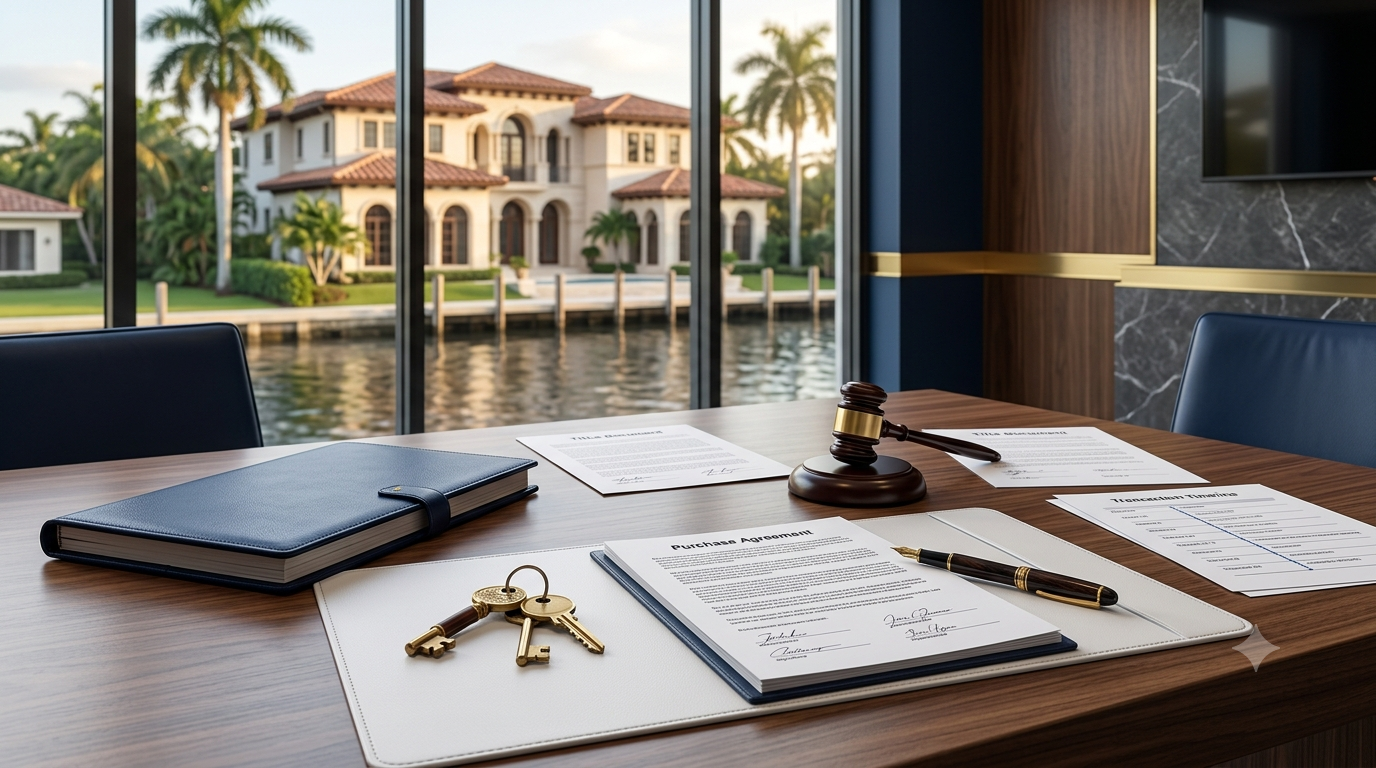
Seller refuses to close on real estate contract in Florida? If you have a signed purchase agreement, have satisfied your contractual obligations, and the seller suddenly says they will not complete the transaction, you may be dealing with more than a frustrating failed closing.
You may be dealing with a potential breach of contract.
This situation can arise days—or even hours—before closing. A seller may receive a better offer, change their mind about moving, decide the property is worth more than the contract price, refuse to resolve title issues, or simply announce that they no longer want to sell.
A buyer should not assume that the seller can automatically cancel simply because ownership has not yet transferred.
At the same time, buyers should be careful before threatening litigation. The signed purchase agreement, financing deadlines, closing date, contingencies, amendments, and the buyer’s own performance can determine whether a valid claim actually exists.
A recent Florida appellate decision illustrates exactly why these details matter. In June 2026, the Fourth District Court of Appeal reversed a judgment that had awarded specific performance to a buyer because the buyer was not ready to close on the contractually required date and the parties had not completed a valid extension of that date.
If a seller refuses to close on a real estate contract in Florida, these seven steps should be considered before the transaction, deposit, or property is placed at greater risk.
What Happens When a Seller Refuses to Close on Real Estate Contract in Florida?
A signed Florida real estate purchase agreement generally creates enforceable obligations for both buyer and seller, subject to the contract’s contingencies and other terms.
A seller may be required to:
- Convey the agreed property
- Provide the required title
- Execute closing documents
- Resolve certain title defects
- Maintain the property as required
- Satisfy agreed contractual conditions
- Close by the contractual deadline
Florida’s Statute of Frauds generally requires a contract for the sale of land to be in writing and signed by the party against whom enforcement is sought.
That written agreement becomes central when a dispute develops.
If a seller refuses to close on real estate contract in Florida, the buyer’s first question should not simply be, “Can I sue?”
The first question should be:
What does the contract actually require from each side?
1. Review the Signed Purchase Agreement Immediately
The purchase agreement controls much of the analysis.
Do not rely only on what the real estate agent, seller, lender, or closing company remembers.
Locate the final signed version and every amendment.
Review provisions involving:
- Purchase price
- Deposit
- Financing contingency
- Inspection period
- Appraisal
- Title requirements
- Closing date
- Extensions
- Seller obligations
- Default
- Remedies
- Attorney’s fees
- Escrow
- Dispute resolution
- Written modifications
One sentence can significantly change the case.
For example, some agreements state that time is of the essence.
That can make a closing deadline especially important.
In the June 2026 Fourth DCA case, the residential contract contained a specific closing date and required modifications to be written and signed. The buyer was not clear to close on the contractual closing date, and an extension addendum was never fully executed. The appellate court ultimately reversed the buyer’s specific-performance judgment.
That case is an important reminder: a buyer who wants to enforce a contract should also make sure the buyer has complied with the agreement.
2. Confirm That You Were Ready, Willing, and Able to Close
If a seller refuses to close on real estate contract in Florida, one of the most important questions is whether the buyer was actually capable of performing.
Specific performance is an equitable remedy. A buyer asking a court to force a seller to complete the sale generally needs a strong factual basis showing the buyer fulfilled, or was prepared to fulfill, required obligations.
Relevant evidence may include:
- Loan approval
- Proof of available cash
- Wire confirmation
- Closing disclosure
- Signed loan documents
- Closing instructions
- Deposit records
- Communications confirming readiness
- Title-company communications
A buyer who did not obtain financing by the required deadline may face a very different legal situation from a buyer who had funds ready and appeared at closing.
Financing Can Make or Break the Case
The 2026 Fourth DCA decision is particularly instructive.
The buyer argued that the closing had been extended, but the court found the evidence insufficient to establish a valid extension. The record also showed that the buyer did not have final loan approval on the original closing date.
This means a buyer preparing to accuse the seller of breach should first make sure their own contractual performance is defensible.
3. Do Not Assume an Oral Extension Is Enough
Real estate deals frequently develop through calls, texts, and emails.
A buyer may hear:
“Don’t worry, we’ll close next Friday.”
“The seller agreed to give you another week.”
“We’re all on the same page.”
Those conversations can become dangerous if the contract requires written changes.
Florida’s Statute of Frauds generally requires agreements concerning the sale of land to be documented in writing and signed.
Additionally, the purchase agreement itself may require modifications to be written and executed.
In the June 2026 Fourth DCA case, the parties discussed extending the closing date. An addendum was circulated, but the parties did not ultimately agree to all of its terms and the sellers did not execute it. The appellate court concluded there was no enforceable modification based on those circumstances.
If a seller refuses to close on real estate contract in Florida and the dispute involves an alleged extension, preserve every:
- Text message
- Draft addendum
- Signed amendment
- Agent communication
- Closing-company message
Do not delete anything.
4. Determine Whether Specific Performance May Be Available
One of the most powerful remedies in a real estate contract dispute is specific performance.
Instead of merely requesting money damages, a buyer may ask the court to order the seller to complete the transaction.
This can be particularly important because real estate is considered unique.
Imagine you contracted to purchase:
- A waterfront property
- A commercial building in a strategic location
- An investment property with unusual zoning
- A particular family home
- A parcel necessary for a development project
Simply getting the deposit back may not compensate you for losing that property.
If a seller refuses to close on real estate contract in Florida, specific performance may therefore deserve immediate evaluation.
However, it is not automatic.
Issues may include:
- Whether an enforceable contract exists
- Whether the buyer complied with contractual obligations
- Whether the buyer was ready, willing, and able to perform
- Whether the seller actually breached
- Whether contingencies remained open
- Whether the agreement had expired
- Whether equitable relief is appropriate
The 2026 Fourth DCA decision shows why a specific-performance case can fail when the buyer cannot establish compliance with the operative closing terms.
5. Preserve the Property Before It Is Sold to Someone Else
This is where immediate legal review can become especially important.
A buyer may learn that the seller is not simply refusing to close.
The seller may be planning to sell the property to someone else.
For example:
You signed a contract for $700,000.
The market changes.
Another buyer offers $775,000.
The seller suddenly claims the first contract is cancelled.
If the first agreement remains enforceable, the original buyer may need to act before the property is transferred.
Depending on the circumstances and claims, counsel may evaluate whether litigation, a lis pendens, injunctive relief, or another appropriate remedy should be considered.
These remedies have legal requirements and should not be used merely as leverage.
But if a seller refuses to close on real estate contract in Florida because another sale is being pursued, delay may materially change the practical situation.
Do Not Contact the New Buyer Aggressively
A disappointed buyer may want to call the competing purchaser and threaten them.
That is usually not the best first move.
Communications made while emotions are high can create unnecessary problems.
Preserve evidence and have the legal position evaluated.
6. Determine Whether You Can Recover Damages
Specific performance is not the only potential remedy.
Depending on the agreement and facts, monetary damages may also be relevant.
A buyer may have incurred expenses such as:
- Inspection fees
- Appraisal costs
- Survey expenses
- Loan expenses
- Title expenses
- Attorney’s fees where recoverable
- Moving-related costs
- Financing consequences
- Other contract-related losses
Whether those amounts are legally recoverable is a separate question.
A buyer cannot simply total every dollar spent and assume the seller owes that amount.
The agreement’s remedy provisions may control or limit recovery.
Causation and proof also matter.
If a seller refuses to close on real estate contract in Florida, preserve invoices and financial documents relating to the failed transaction.
Do not estimate losses from memory months later.
7. Have an Attorney Review the Dispute Before You Cancel Anything
This is one of the most important steps.
A buyer who becomes angry may send a message saying:
“Fine. Cancel the deal and return my deposit.”
That statement might conflict with a later attempt to demand specific performance.
Similarly, signing a cancellation and release may waive contractual rights.
Before signing:
- Cancellation agreement
- Deposit release
- Mutual release
- Settlement
- Escrow instruction
- Contract amendment
consider having the document reviewed.
If a seller refuses to close on real estate contract in Florida, the buyer may need to decide between fundamentally different strategies:
Do you still want the property?
or
Do you want to terminate and seek money?
Those choices may affect the legal remedy pursued.
Why Would a Seller Refuse to Close?
Not every refusal is motivated by bad faith.
Common reasons include:
Seller Received a Better Offer
This can create a serious dispute if the first agreement remains enforceable.
Seller Changed Their Mind
A seller may decide they no longer want to move or sell.
A change of heart does not necessarily create a contractual right to terminate.
Property Value Increased
If market value rises significantly between contract and closing, a seller may regret the agreed price.
Again, seller’s remorse alone does not automatically cancel a binding agreement.
Title Problems Developed
The seller may discover:
- Judgment lien
- Probate issue
- Unreleased mortgage
- Ownership dispute
- Code issue
- Incorrect legal description
Whether the seller has time to cure and whether the buyer may terminate depends on the contract.
Buyer Missed a Deadline
This is different.
A seller may have a legitimate contractual basis for refusing to close if the buyer materially failed to perform.
That is why the buyer’s own compliance must be reviewed first.
What If the Seller Says the Contract Expired?
This can become the central issue.
Check:
- Closing date
- Extension language
- Financing contingency
- Automatic extension provisions
- Written amendments
- Title cure provisions
- Force majeure language
- Communications between parties
Do not rely on an agent’s verbal interpretation.
The June 2026 Fourth DCA case centered heavily on whether the contractual closing date had been validly extended. The appellate court concluded that the required conditions for the claimed extension were not established and reversed the judgment for the buyer.
That makes current contract language especially important.
What Happens to the Escrow Deposit?
If the deal fails, both parties may demand the earnest-money deposit.
The buyer may argue:
“The seller breached. Give me my money back.”
The seller may respond:
“The buyer failed to close. We are entitled to the deposit.”
The escrow holder may be unwilling to release funds while instructions conflict.
The contract typically includes procedures addressing deposits and defaults.
Before signing a release, determine whether doing so affects other claims.
If you still want specific performance, simply accepting a deposit refund could complicate the strategy depending on the circumstances.
Can You Force a Seller to Sell the Property?
Potentially.
That is the purpose of a specific-performance claim.
But the court does not automatically order a sale simply because a signed contract exists.
A buyer pursuing this remedy should expect scrutiny regarding:
- Contract validity
- Contract terms
- Buyer’s performance
- Closing deadline
- Financing
- Seller’s alleged breach
- Equitable considerations
A buyer who remained fully ready to complete the transaction will generally be in a different position from someone who was unable to close on time.
Should You Send a Demand Letter First?
Often, legal counsel may consider sending a carefully drafted demand before filing suit.
A demand might address:
- Contract terms
- Buyer’s performance
- Seller’s refusal
- Required closing
- Deadline for response
- Preservation of rights
- Potential legal remedies
But the strategy depends on urgency.
If another sale is imminent, waiting through a lengthy demand period may not be appropriate.
This is why a seller refuses to close on real estate contract in Florida situation can justify prompt attorney review.
Why Timing Matters
Real estate disputes can change quickly.
The seller may:
- Sign another agreement
- Transfer the property
- Attempt to terminate the contract
- Demand release of escrow
- Record another document
- Change the property’s condition
Meanwhile, the buyer may face:
- Loan expiration
- Interest-rate changes
- Moving deadlines
- Lease expiration
- Financing costs
- Lost investment opportunities
Waiting several weeks can make a transaction dispute substantially more complicated.
How Can a Florida Real Estate Attorney Help?
A Florida real estate attorney can evaluate:
- Purchase agreement
- Amendments
- Closing date
- Financing status
- Title commitment
- Escrow records
- Buyer performance
- Seller’s communications
- Default provisions
- Specific-performance rights
- Potential damages
- Litigation options
The attorney may then determine whether the situation is better suited for:
- Negotiation
- Demand letter
- Closing enforcement
- Specific-performance litigation
- Damages
- Escrow dispute resolution
- Termination
- Another remedy
The strategy should depend on what the buyer actually wants.
Frequently Asked Questions About When a Seller Refuses to Close on Real Estate Contract in Florida
Can a seller simply change their mind before closing?
Not necessarily. If a binding purchase agreement exists and no contractual termination right applies, changing one’s mind may expose the seller to a breach claim.
Can I force the seller to close?
Specific performance may be available in appropriate Florida real estate disputes, but the buyer’s compliance with the contract and ability to perform are important considerations.
What if the seller got a better offer?
A better offer does not automatically terminate an existing enforceable contract. The first agreement should be reviewed promptly.
What if I was not ready on the original closing date?
That can materially affect the case. A June 2026 Florida appellate decision reversed a specific-performance judgment where the buyer was not ready to close on the operative contractual date and no enforceable extension was established.
Can the seller keep my deposit?
That depends on who actually breached and what the contract’s default and deposit provisions provide.
Can an oral agreement extend the closing date?
Do not assume it will. Florida law generally requires land-sale agreements to satisfy the Statute of Frauds, and the contract may independently require written, signed amendments.
When should I call a real estate attorney?
If the seller has explicitly refused to close, threatened to sell to someone else, demanded cancellation, or the closing deadline is approaching, prompt legal review may be appropriate.
Seller Refuses to Close on Real Estate Contract in Florida? Consider Acting Before the Property Is Transferred
When a seller refuses to close on real estate contract in Florida, the buyer may have much more at stake than an earnest-money deposit.
The property itself may be the primary objective.
Depending on the circumstances, potential issues can include breach of contract, specific performance, damages, escrow rights, title problems, and urgent efforts to preserve the transaction.
But the buyer’s own performance is equally important.
A strong analysis starts with the signed agreement, closing deadline, financing documents, amendments, and communications—not assumptions about what the seller “should” do.
The Law Offices of Lance Denha, PA assists clients with Florida real estate contracts, disputes, transactions, and litigation.
If a seller has refused to complete a signed Florida real estate transaction, consider having the agreement reviewed promptly before signing a cancellation, releasing escrow funds, or allowing the property to be transferred to another purchaser.
Law Offices of Lance Denha, PA
844-410-4415
Every real estate dispute depends on the specific agreement, facts, documents, and applicable law. No particular outcome can be guaranteed.
This article is provided for general informational purposes only and does not constitute legal advice. Reading this article does not create an attorney-client relationship.
